Tablets
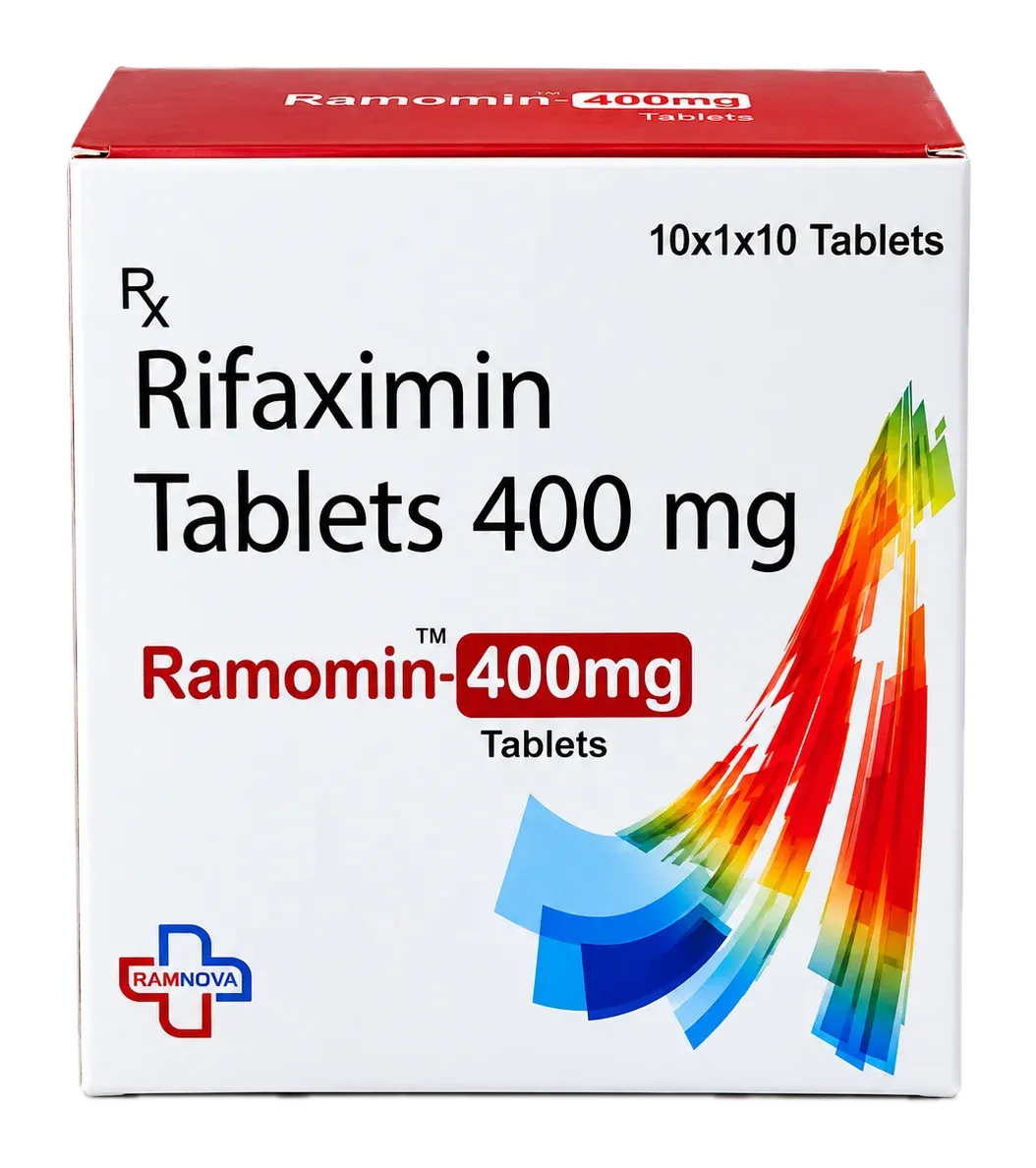
Ramomin-400 Tablet
Rifaximin 400 mg tablets
Ramomin-400 is a registered product of Ramnova Healthcare Private Limited.
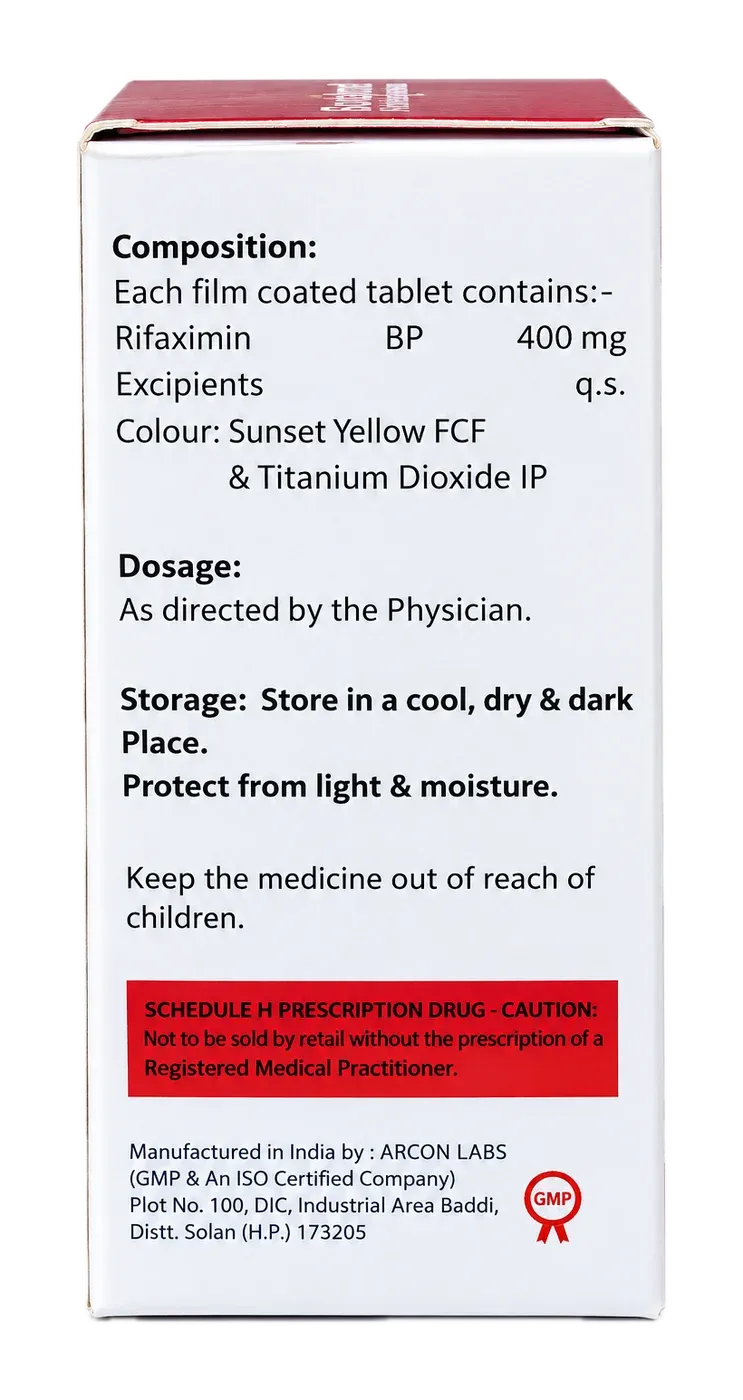
Ramomin-400 Tablet composition
Each film-coated tablet contains
| Ingredient | Strength |
|---|---|
| RifaximinBP | 400 mg |
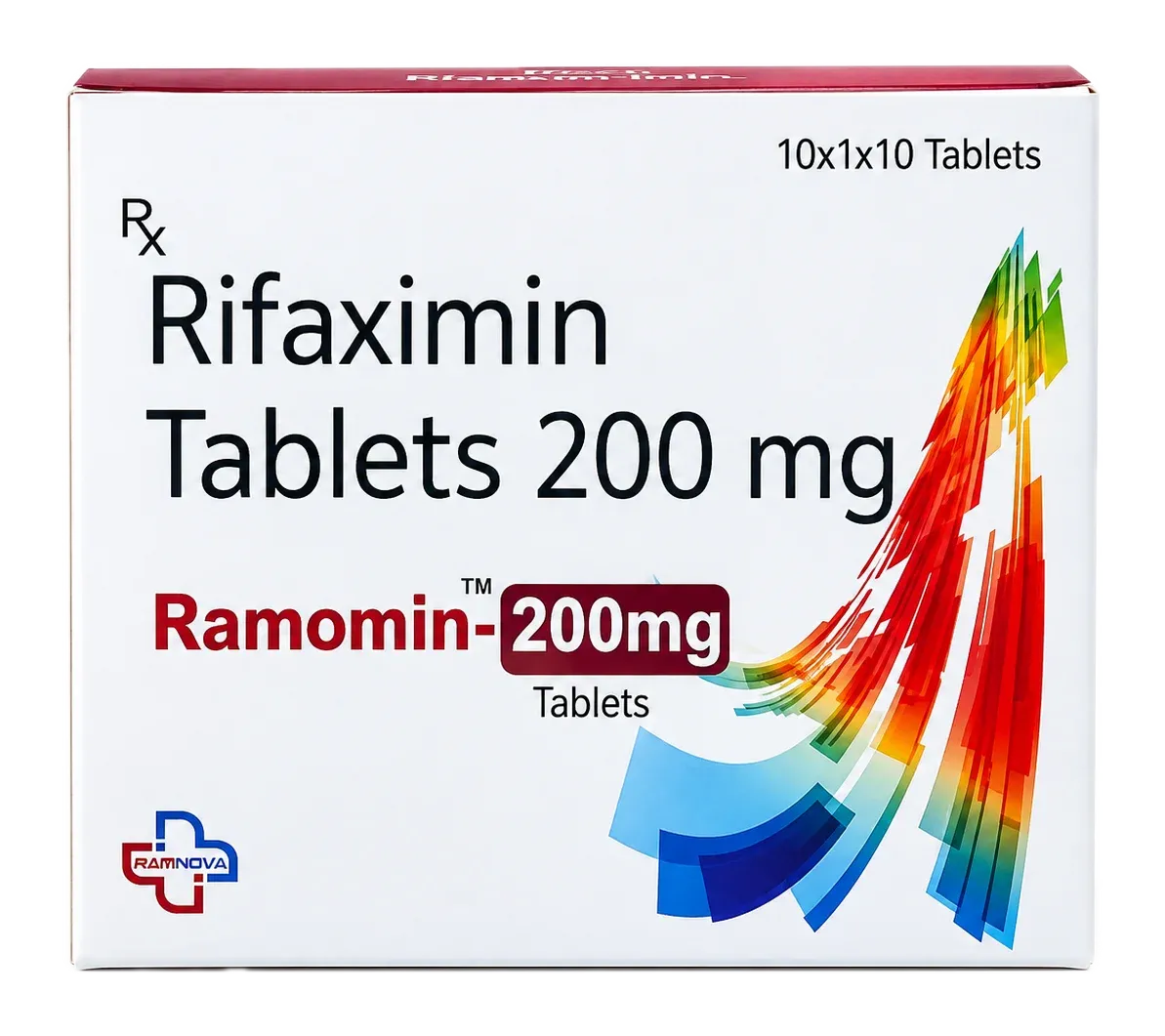
Also in the Ramomin range
About Ramomin-400 Tablet
RAMOMIN-400 tablets contain rifaximin 400 mg, an antibiotic that acts mainly inside the gut because very little is absorbed into the bloodstream. It is used to treat infectious diarrhoea and other intestinal infections, to help lower ammonia in liver disease, and to reduce gut bacteria around bowel surgery.
Take it with or without food, exactly as your doctor prescribes. For diarrhoea it is usually taken for only a few days. Common side effects include nausea, bloating and headache, and it may turn your urine reddish, which is harmless.
Therapy category: Antibacterial medicine.
Uses of Ramomin-400 Tablet
- Acute and chronic intestinal infections caused by non-invasive bacteria
- Infectious diarrhoea
- Adjuvant therapy in hyperammonaemia
- Pre- and post-operative prophylaxis in gastrointestinal surgery
Benefits of Ramomin-400 Tablet
Acute and chronic intestinal infections
Rifaximin acts against a wide range of gut bacteria in intestinal infections caused by bacteria that do not invade the gut wall. Because it stays in the gut, it works where the infection is.
Infectious diarrhoea
Rifaximin kills many of the bacteria that cause traveller's and other infectious diarrhoea, such as non-invasive strains of E. coli, and can shorten the illness. It is not suitable for diarrhoea with fever or blood in the stool, which needs other treatment.
Adjuvant therapy in hyperammonaemia
In advanced liver disease, gut bacteria produce ammonia, which can build up and affect the brain (hepatic encephalopathy), causing confusion and drowsiness. Rifaximin reduces these bacteria, lowering ammonia and helping to prevent episodes, usually alongside lactulose.
Before and after gut surgery
It may be used to reduce the number of gut bacteria before and after bowel surgery, lowering the risk of infection.
Side effects of Ramomin-400 Tablet
Most side effects are mild and settle as your body adjusts. Tell your doctor if they continue or worry you.
- Nausea, vomiting or abdominal pain
- Bloating, wind or constipation
- Headache or dizziness
- Muscle cramps
- Swelling of the ankles or legs, mainly in people with liver disease
- Reddish discoloration of the urine, which is harmless
How to take Ramomin-400 Tablet
Take this medicine in the dose and for the length of time your doctor advises. Swallow the tablet whole with water, with or without food. For infectious diarrhoea, treatment usually lasts no more than 3 days; for liver-related conditions it may be longer.
How Ramomin-400 Tablet works
Rifaximin is an antibiotic related to rifampicin. It blocks a bacterial enzyme needed to make RNA, so bacteria cannot produce the proteins they need to grow. Less than 1% is absorbed, so it stays in the gut, where it acts on the bacteria that cause diarrhoea and on those that produce ammonia.
Safety advice for Ramomin-400 Tablet
- Use with caution
Alcohol
Avoid alcohol. It irritates the gut and is harmful in liver disease.
- Use with caution
Pregnancy
Not recommended during pregnancy unless your doctor considers it essential.
- Consult your doctor
Breastfeeding
It is not known whether rifaximin passes into breast milk. Ask your doctor before use.
- Safe
Driving
Not expected to affect driving, although dizziness can occasionally occur.
- Consult your doctor
Kidney
There is limited information in kidney disease. Tell your doctor if you have kidney problems.
- Use with caution
Liver
Use with caution in severe liver disease. Your doctor will monitor you.
Quick tips
- Drink plenty of fluids, or oral rehydration solution (ORS), while you have diarrhoea.
- Don't worry if your urine turns reddish; this is harmless.
- See your doctor if diarrhoea does not improve within 2 to 3 days, or if you develop fever or blood in your stool.
- Complete the course your doctor prescribes.
- If you take warfarin, your INR may need checking more often.
- If you have liver disease, keep taking your other treatments, such as lactulose, as prescribed.
Warnings and interactions
Safety details must be checked against the current pack insert and advice from a qualified healthcare professional.
Warnings
- It is not suitable for diarrhoea with fever or blood in the stool, which may be caused by bacteria that invade the gut wall.
- Like other antibiotics, it can cause a serious bowel infection (Clostridioides difficile). See your doctor if diarrhoea becomes severe or persistent.
- Rarely, serious skin reactions have been reported, especially in people with liver disease. Stop taking it and seek help if a widespread rash or blistering develops.
- Use with caution in severe liver disease.
Contraindications
- Allergy to rifaximin or other rifamycin antibiotics, such as rifampicin or rifabutin
- Blockage of the intestines
Important interactions
- Ciclosporin can greatly increase the amount of rifaximin absorbed.
- It can change the effect of warfarin, with both higher and lower INR reported, so your INR should be checked closely.
- In people with liver disease it may reduce the effect of hormonal contraceptives, so ask your doctor whether extra contraception is needed.
Frequently asked questions about Ramomin-400 Tablet
- Ramomin-400 Tablet is used for: acute and chronic intestinal infections caused by non-invasive bacteria; infectious diarrhoea; adjuvant therapy in hyperammonaemia; and pre- and post-operative prophylaxis in gastrointestinal surgery.
- Common side effects of Ramomin-400 Tablet include: nausea, vomiting or abdominal pain; bloating, wind or constipation; headache or dizziness; muscle cramps; swelling of the ankles or legs, mainly in people with liver disease; and reddish discoloration of the urine, which is harmless. Tell your doctor if they continue or worry you.
- Take this medicine in the dose and for the length of time your doctor advises. Swallow the tablet whole with water, with or without food. For infectious diarrhoea, treatment usually lasts no more than 3 days; for liver-related conditions it may be longer.
- Do not take Ramomin-400 Tablet in the following cases: allergy to rifaximin or other rifamycin antibiotics, such as rifampicin or rifabutin; and blockage of the intestines.
- Avoid alcohol. It irritates the gut and is harmful in liver disease.
- Not recommended during pregnancy unless your doctor considers it essential.
- Not expected to affect driving, although dizziness can occasionally occur.
- Ramomin-400 is a registered product of Ramnova Healthcare Private Limited, Silvassa, India, and is marketed by Ramnova Healthcare.
- Ramomin-400 Tablet contains rifaximin 400 mg (BP) in each film-coated tablet.
What is Ramomin-400 Tablet used for?
What are the side effects of Ramomin-400 Tablet?
How should I take Ramomin-400 Tablet?
Who should not take Ramomin-400 Tablet?
Can I drink alcohol with Ramomin-400 Tablet?
Is Ramomin-400 Tablet safe in pregnancy?
Can I drive after taking Ramomin-400 Tablet?
Who markets Ramomin-400 Tablet?
What is the composition of Ramomin-400 Tablet?
More information
Marketed by Ramnova Healthcare Private Limited, Silvassa, India.
For dosage, pack sizes or prescribing information, refer to the current pack insert or contact Ramnova Healthcare. Catalogue information updated 2026-10-06.
- electronic medicines compendium (emc): Rifaximin 200 mg film-coated tablets: Summary of Product Characteristics (United Kingdom, accessed 2026-10-01)
- electronic medicines compendium (emc): Rifaximin 550 mg film-coated tablets: Summary of Product Characteristics (United Kingdom, accessed 2026-10-01)